

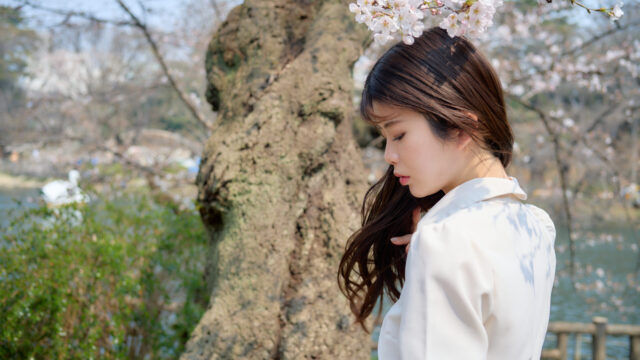

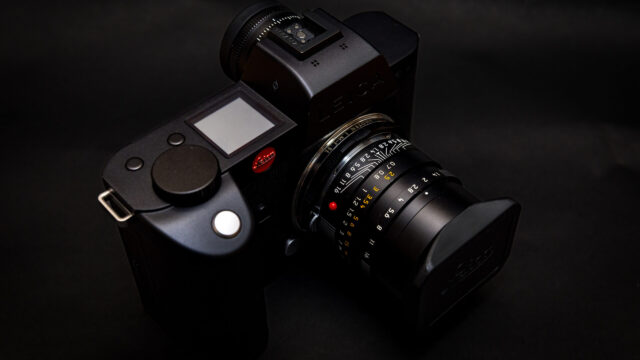
The “Vanishing” of Physics and the “Emotion” Beyond Limitations: A Dream Woven by Three Summiluxes and a 300mm f/2.8. In the world of Leica lenses, there is a “sacred ground” that cannot be ignored: the lineage of the “Summilux,” defined by its striking f/1.4 aperture. Recently, after piercing through GT cars at Fuji Speedway with the Canon 300mm f/2.8 IS II—a masterpiece of modern optics—I mounted a Leica lens on my SL2-S and began shooting portraits. In that moment, I felt the very nature of the adrenaline coursing through my brain shift with a distinct crackle. If the 300mm is a tool for capturing “facts” with startling clarity, the Summilux is a magician that paints “emotions” with light. But before immersing myself in that world of “emotion,” I first wanted to savor the “violent reality” of the 300mm through a portrait of Kisaragi. 0. 300mm f/2.8 IS II — An Overwhelming “Vanishing” that Defies the Laws of Physics. Shooting portraits with a 300mm f/2.8 is a high-stakes battle. It’s not about “taking a pretty picture”—it’s a struggle to bend the laws of physics to your will. The staggering compression of a 300mm focal length combined with an f/2.8 aperture on this massive glass element creates a “complete vanishing” of the background that makes f/1.4 pale in comparison. It isn’t merely “bokeh”; it’s a violent rendering that detaches the subject from this dimension, making them float in a void of pure light. It is by no means the latest lens. Yet, the AF performance of the EOS R3 pierces through Kisaragi’s eyes with absolute, unhesitating precision, even within a rendering that defies physical limits. “At 300mm, it’ll blur anyway, so why not just shoot wide open?” This mindset is the madness of 300mm portraiture. It exists in a realm of “vanishing” entirely different from the “pleasant bokeh” of a 35mm or 50mm lens. 1. 35mm f/1.4 ASPH. (FLE) — A Miraculous Marriage of Resolution and Atmosphere. If you asked me what I love most as a visual image right now, I would tell you without hesitation: it’s this 35mm 4th (ASPH / FLE model). The power of this lens lies in the breathtaking resolution provided by the aspherical element and the stability at close range from the Floating Element (FLE) mechanism. That “delicate line work” I experienced with the 300mm is condensed here into a compact 35mm Leica body. When you trip the shutter at f/1.4, the focal plane rises with terrifying sharpness. Yet, it is surrounded by a gentle atmosphere unique to Leica, as if draped in a thin veil. 2. 50mm f/1.4 1st (The Noblewoman) — Night Streets and Daylight: A “Masterpiece” of Woven in Flares. My second choice remains the 50mm 1st, known as “The Noblewoman.” This lens is the polar opposite of the FLE’s stability; it is entirely committed to “emotion.” The allure of the Noblewoman lies, above all, in its “blooming” (halo). I used this lens to capture a portrait of Kisaragi. The moment she stood in harsh backlight or under a nighttime streetlamp, the Noblewoman made that light explode beautifully, spinning a dramatic narrative. It delivers a “masterpiece” where she seems to vanish into the light. 3. 50mm f/1.4 4th — An Honor Student of Realism, Standing Between Tradition and Innovation. And then, the 50mm 4th. Its lineage is fascinating. While rooted in modern resolution, it inherits the traditional Leica “luster” from the Noblewoman, modernized by Peter Karbe. It is a masterpiece where traditional emotion and modern precision coexist. In my portraits of Hinata, it possesses a “realism” that depicts her presence with both raw vitality and elegance. It is a reliable honor student. To be honest, I never intended to buy this much Leica, nor did I ever plan to fall this deep into the rabbit hole. With a lens as versatile as the EF 24-70mm, I saw no reason to spend money on a smaller zoom. Similarly, I couldn’t find the value in dropping 300,000 yen on a domestic prime lens. Yet here I am, having paid that much—and more—to hold a Summilux in my hands. No AF. No close-up capability. These inconvenient, limited lenses have awakened a new set of values within me. The ritual of tracing the craft-like lens barrel and focusing by my own will—if this were a modern AF lens, I would have relied on the camera’s performance. And I surely would have muttered to myself, “This is somehow boring.” Because of the limitations, I think deeply about every single frame. I’ve been taught from scratch the joy of facing a photograph. That experience alone is worth every yen spent. Leica gave me the courage to find the “one” and dive in without hesitation. Subduing physics with the 300mm, and enjoying the limitations with the Summilux. Even if I encounter a lens of “madness” in Shinjuku or Ginza tomorrow, I will no longer hesitate. For I am certain that beyond those limitations lies the greatest photograph I have yet to see.
物理法則の「消失」と、不自由の先の「情緒」。三本のズミルックスとサンニッパが魅せる夢。
0. サンニッパ (300mm f2.8 IS II) ―― 物理法則を無視した、圧倒的な「消失」。
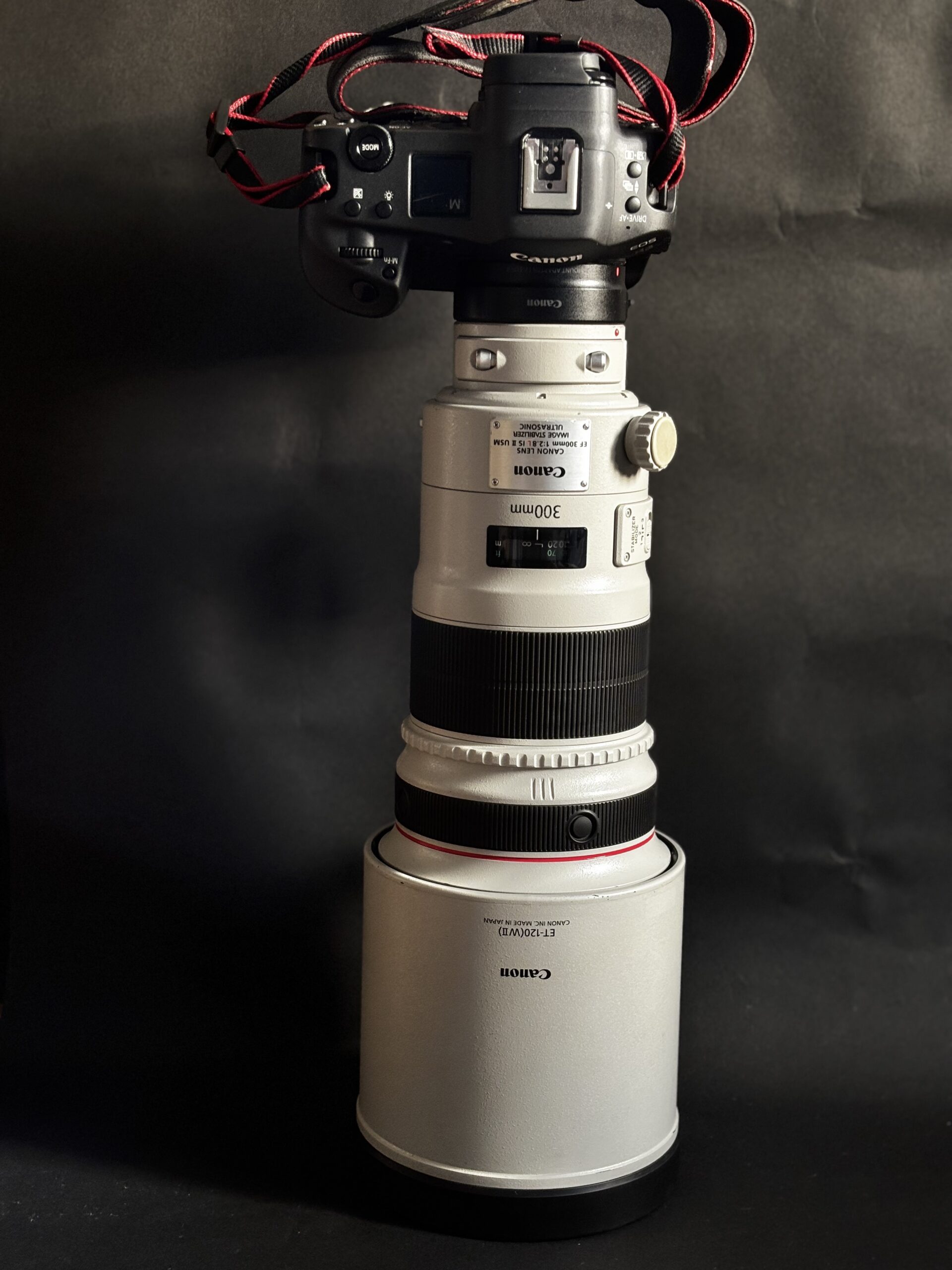
サンニッパで撮るポートレートは、バチバチの勝負だ。それは「綺麗に撮る」のではなく、「物理法則をねじ伏せる」戦いだ。

1. 35mm f1.4 ASPH. (FLE) ―― 解像と情緒の、奇跡的なマリアージュ。
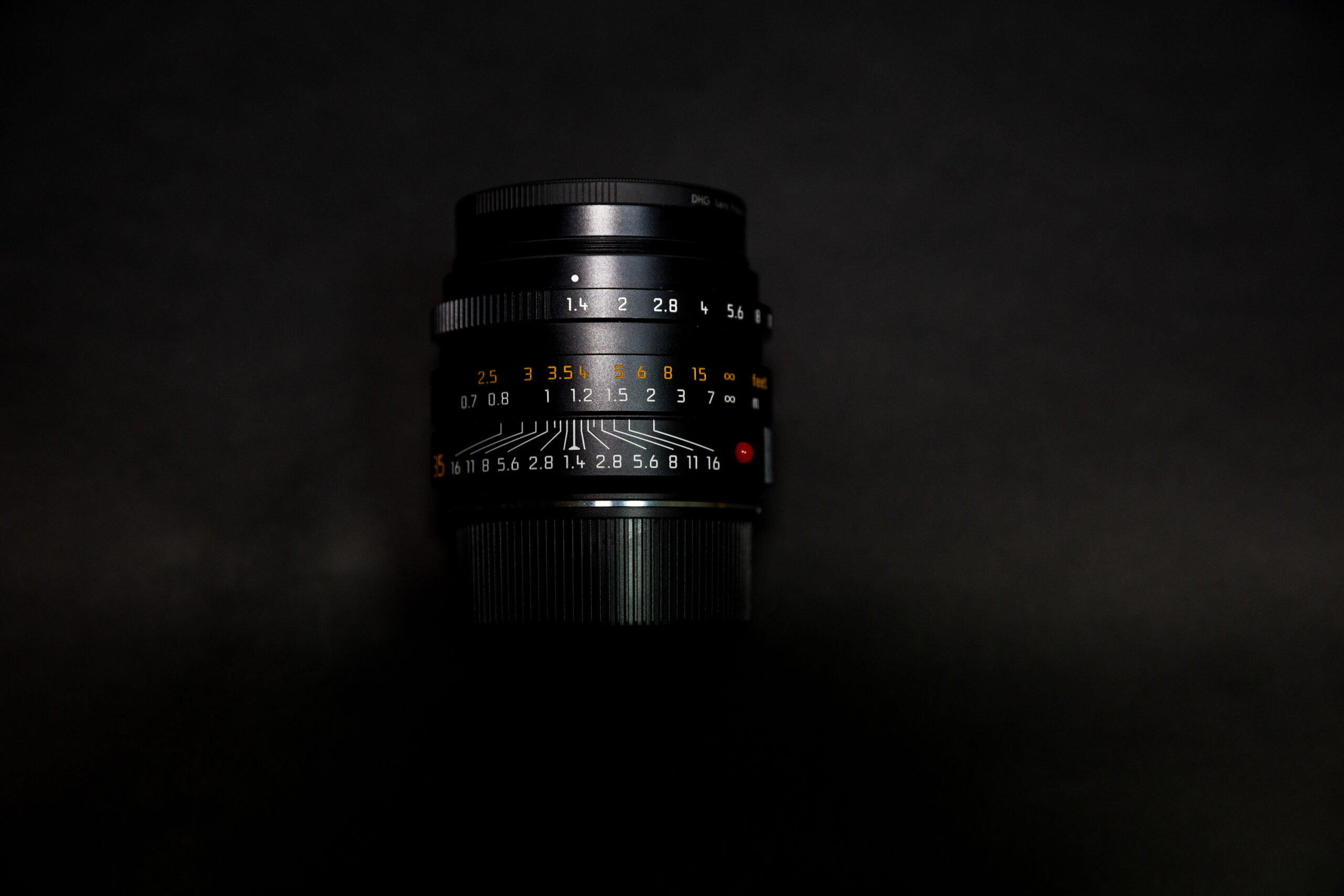
今の私が「最も絵として好き」だと断言できるのは、この35mm 4th(非球面・FLE採用モデル)だ。
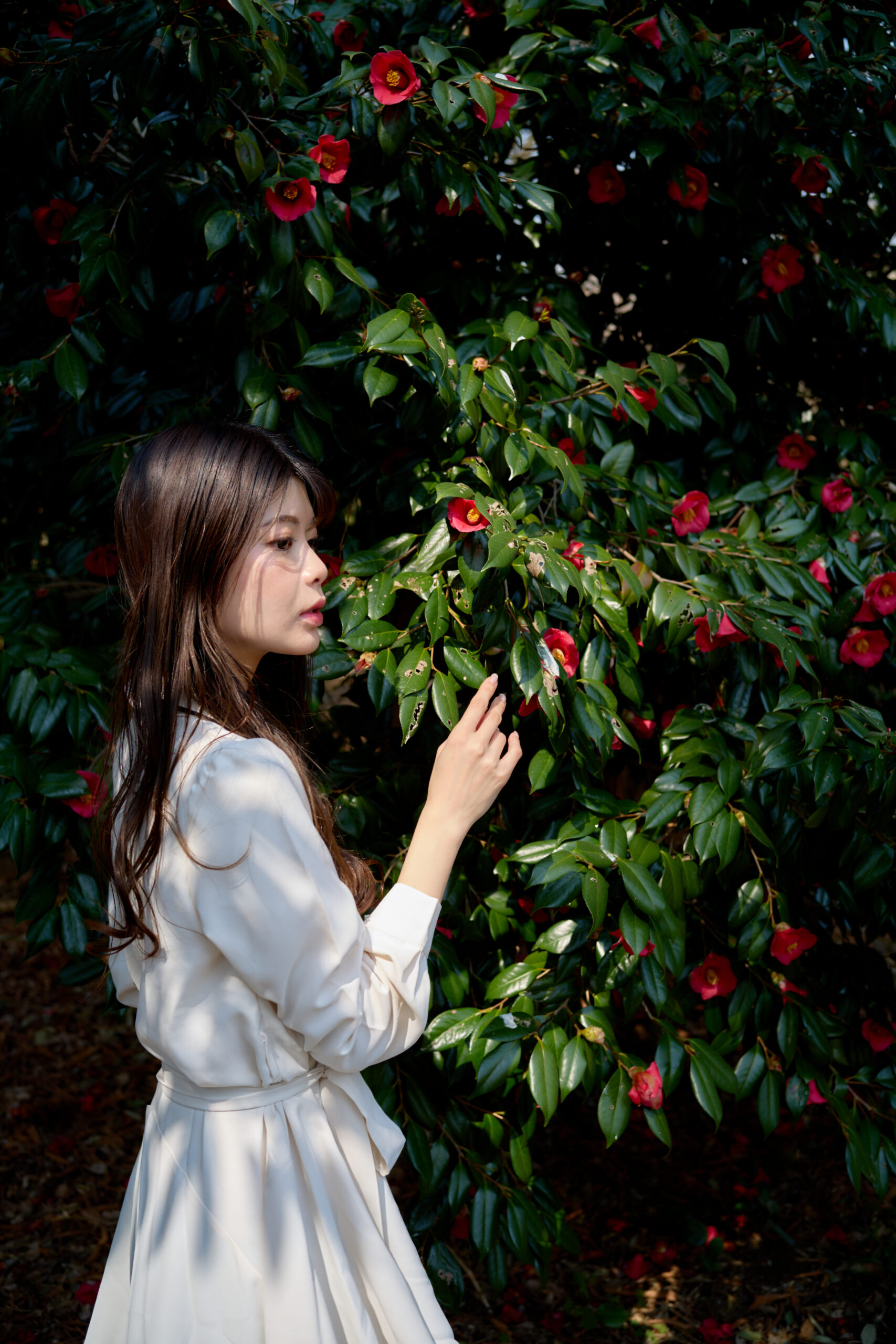
このレンズの凄みは、非球面レンズ(ASPH.)による圧倒的な解像感と、フローティング・エレメント(FLE)機構による近距離での安定性にある。サンニッパで味わった「あの線の細さ」が、ライカのコンパクトな35mmに凝縮されているのだ。
2. 50mm f1.4 1st (貴婦人) ―― 夜の町、昼の光。滲みが紡ぐ、「最高の一枚」。
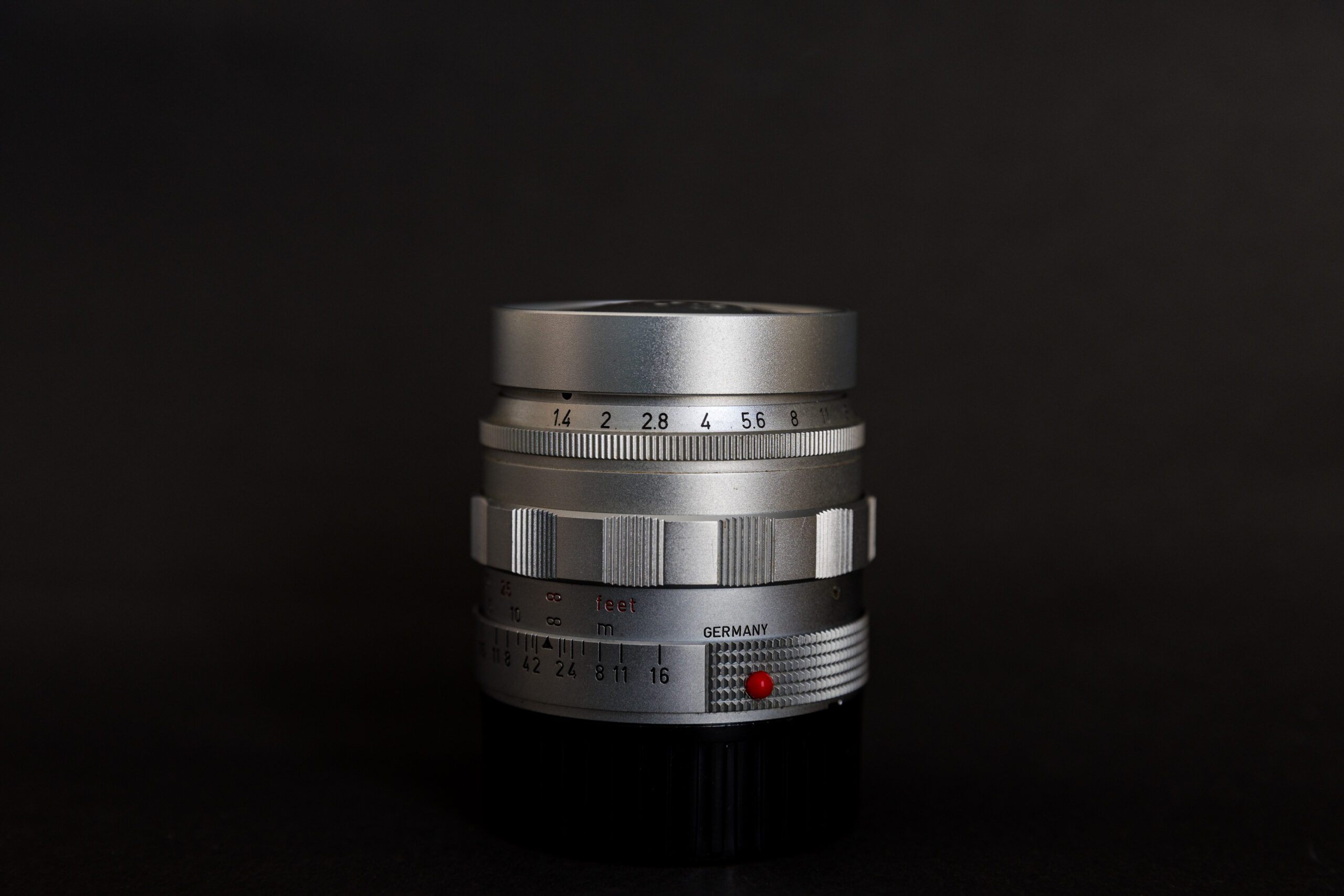
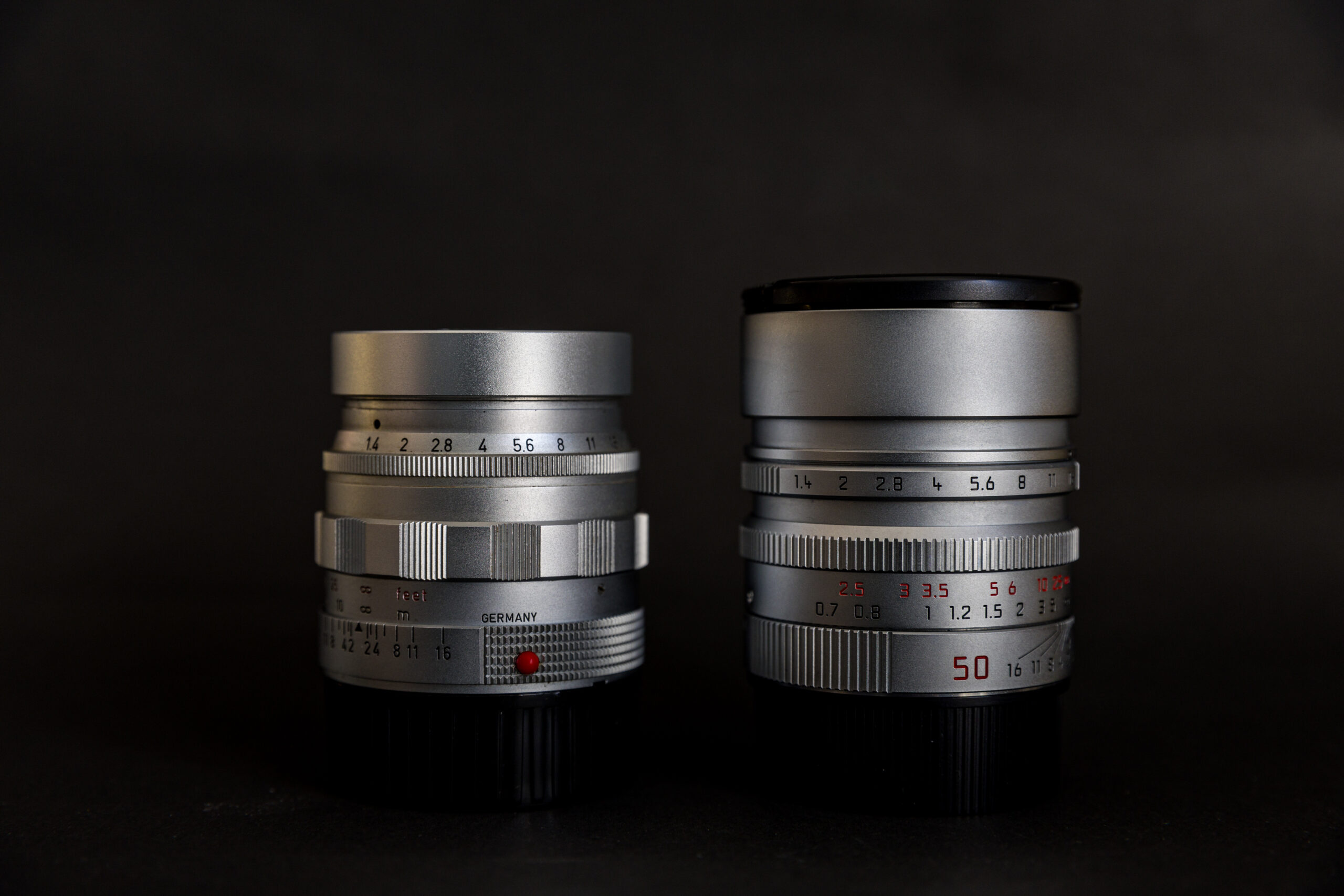
次点は、やはり50mm 1st(貴婦人)。

3. 50mm f1.4 4th ―― 伝統と革新の狭間に立つ、リアリズムの優等生。
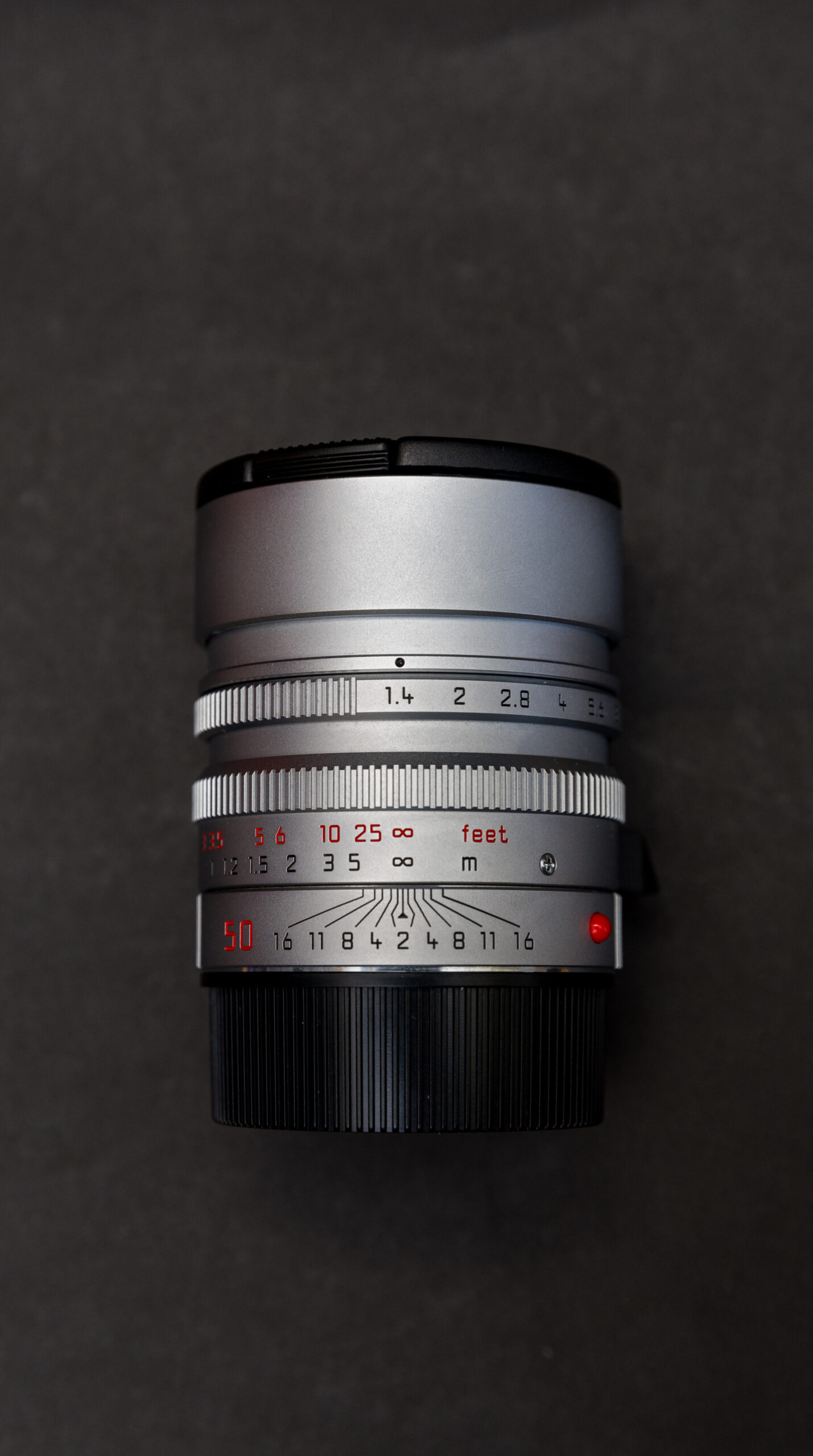
そして、50mm 4th。
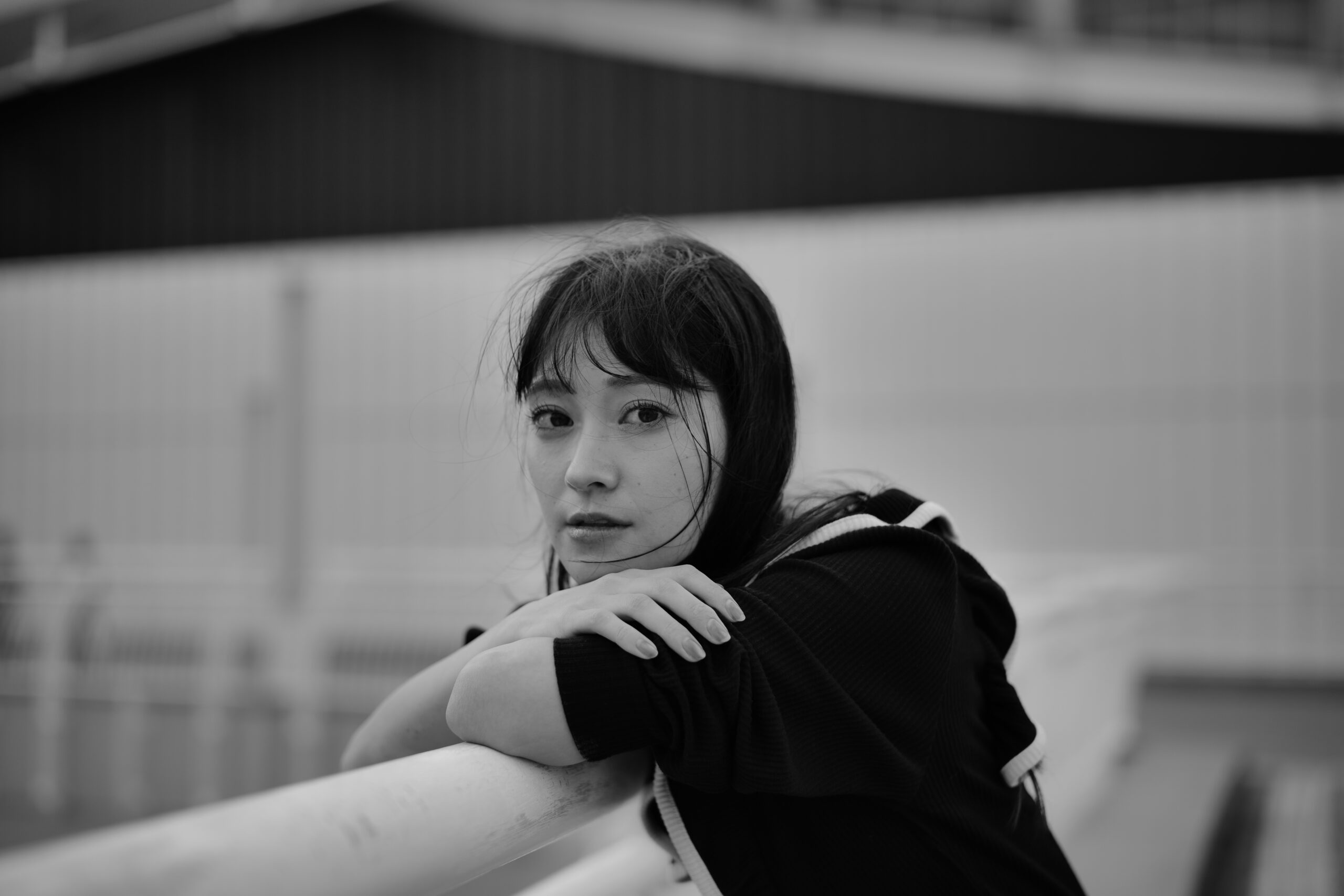
不自由が教えてくれた、写真を「撮る」という本質。
The Essence of “Taking” Photos, Taught by Limitations.
正直に言えば、ライカをここまで買う予定も、ハマるつもりもなかった。
物理法則の「消失」と、不自由の先の「情緒」。三本のSummiluxとEF300mm F2.8が魅せる夢。
 Canon
Canon
コメント